
Sorcery Accusation Related Violence is a significant issue in Papua New Guinea, causing great harm to communities and individuals. The belief in sorcery or witchcraft is widespread in both rural and urban areas, posing a serious threat. Churches play a crucial role in addressing SARV, but there is a need for increased cooperation and action. The Melanesian Institute is calling for all churches to work together to tackle this urgent issue.
SARV has a profound impact, especially on vulnerable groups such as children and people with disabilities. The cycle of violence and fear perpetuates inter-generational trauma, highlighting the need for the church to provide spiritual guidance, practical assistance, and protection to those affected. SARV also contributes to displacement, forcing survivors to seek safety elsewhere.
The government must step up efforts to improve essential services and support survivors. Education and awareness campaigns are crucial in addressing the root causes of SARV and should be integrated into the national curriculum.
Churches have the potential to significantly change the SARV response, but this potential remains largely untapped. Clarity and a firm stance against SARV are crucial, especially when lives are at stake. As churches work to combat SARV, they must also hold the government accountable for ensuring the safety and well-being of all citizens.
SARV is a crime against humanity that demands a collective response. Churches, as agents of positive change, have the responsibility to use their influence to protect human rights and promote justice for all. It is time for churches to realize their full potential in combating SARV, without room for ambiguity or indifference.
The Nationwide Public Opinion Survey findings are out
The Institute’s fourth evidence-based advocacy campaign against SARV, supported by the Australian Government through the Building Community Engagement in Papua New Guinea Program.
Read the key findingsPolicy paper: Why SARV matters for PNG churches
Sorcery Accusation Related Violence is destroying many lives in our communities today. The Melanesian Institute is taking a step forward in working with the churches to eradicate this issue.
Sanguma in Paradise
The Melanesian Institute has carried out research on Sorcery Accusation Related Violence since 1985, and has produced many publications on the subject. The first publication we summarised is Sanguma in Paradise, which was, in 2009, the product of a five-year research program on sorcery, witchcraft and Christianity in Papua New Guinea.
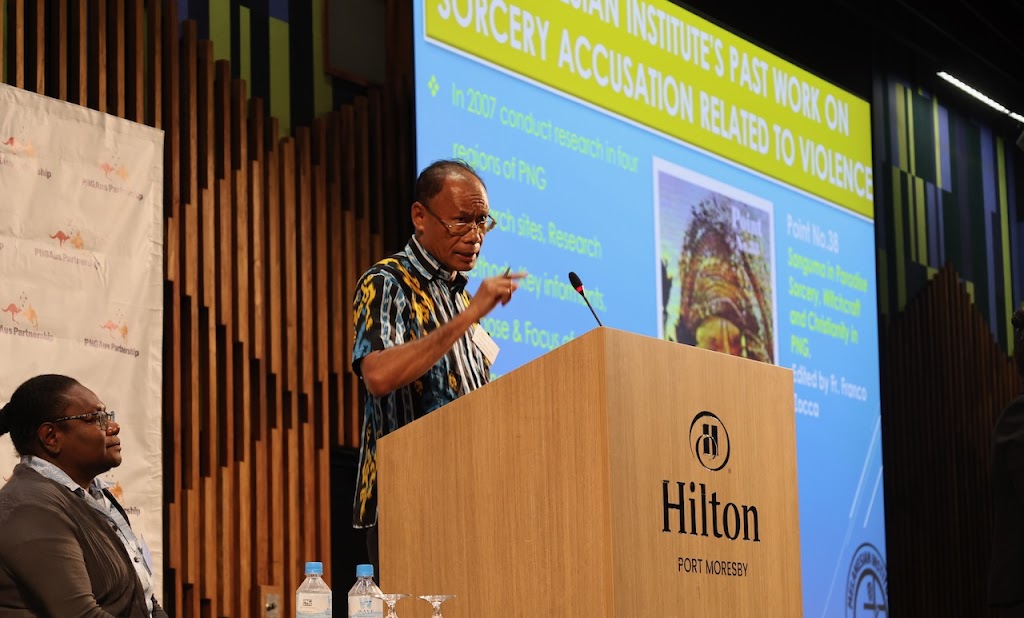
Church-run health centres prepared to tackle SARV emergencies
A study by the Melanesian Institute found that church-run health centres in Papua New Guinea are well-prepared to handle emergency cases of Sorcery Accusation Related Violence. These centres provide essential medical treatment and counselling, ensuring timely and comprehensive care for survivors. The study highlights collaborative efforts in Enga and Chimbu provinces and calls for greater recognition and documentation of SARV cases to inform policy-making. Despite challenges, church healthcare workers remain dedicated to offering compassionate care and support to survivors.
Post Courier, 7 October 2024 — by Jeffrey Elapa
Sorcery Accusation Related Violence and health
Churches play a vital role in addressing SARV, but increased cooperation and action are needed. The Institute’s research paper highlights the role of healthcare in managing SARV, emphasising the need for better collaboration, workforce development, and tailored responses to support survivors.
Post Courier, 8 October 2024 — by Jeffrey Elapa